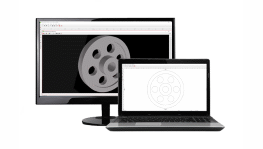
CNC Manufacturing Services
eMachineShop offers CNC machining, sheet metal fabrication, injection molding, 3D printing, and much more.
Learn more about our capabilities below or upload your design for a fast quote.
- 50+ Materials.
- FREE Shipping in the USA.
- 100% Quality Guaranteed.
Consistent precision and quality
“The parts I received were machined to spec. Price and quality are excellent.”
“Our parts came out better than expected. I’ll be using eMachineShop again.”
“After local shops passed on my project, eMachineShop delivered exactly the CNC-milled brackets I needed, on time.”

Services
CNC Milling
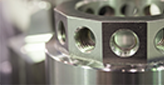
Mills use rotating tools to cut material into almost any 3D shape. CNC Mills can work with tight tolerances.
CNC Turning
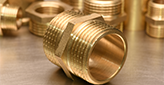
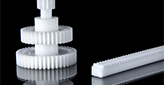
CNC Lathes feed cutting tools into rotating material. Turning is mainly used to produce precise, cylindrical parts.
CNC Waterjet Cutting
Waterjets mainly cut sheet material into 2D parts using a high-pressure stream of water and abrasive. Waterjet cutting is suitable for most materials and yields clean edges.
CNC Laser Cutting
Laser cutting is often used to produce 2D parts from sheet metal. A laser beam vaporizes a cut path to achieve the desired shape. Great for prototypes and short runs.
Injection Molding
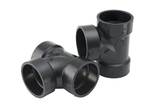
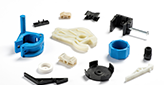
Injection Molding produces parts by forcing molten polymer material into a mold. It’s the most economical process for producing high volumes of plastic parts.
3D Printing
3D Printing (aka Rapid Prototyping) is an additive manufacturing process. It’s often used for testing designs and quick-turn low-volume 3D parts.
Sinker and Wire EDM
EDM machines create parts by using recurring sparks to remove material. Recommended for intricate designs requiring sharp inside corners and high dimensional accuracy.
CNC Plasma Cutting
CNC Plasma Cutters use a high-velocity stream of ionized gas to cut parts out of sheet metal. Excellent for producing 2D parts when working with thick metal sheets.
Compression Molding
Rubber Compression Molding creates parts by pressing a heated block of rubber into a mold. Ideal for making high volumes of simple rubber parts.
CNC Routing
CNC Routing creates precise cuts in sheet materials by removing material with a rotating tool.
Secondary Processes
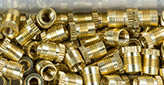
After manufacturing, parts may require additional processing. Secondary services include CNC bending, grinding, tapping, knurling and more.
Surface Finishing
Finishing processes are used to enhance appearance, surface durability, and corrosion resistance. Options include powder coating, anodizing, plating, polishing and more.