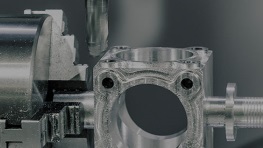
CNC Laser Cutting Services
Laser cutters produce metal parts from sheet material using a laser beam to vaporize sections of the workpiece.
eMachineShop offers a cost-effective cutting solution whether you need a single part, batch of prototypes, or a production order.
- 50+ Materials.
- FREE Shipping in the USA.
- 100% Quality Guaranteed.

Advantages of Laser Cutting
- Can produce parts of almost any 2D shape
- More precise and economical than plasma cutting
- Fast turn time
- Can be used to etch instead of cut
Laser Cutting Design Tips
- Sharp inside corners may be slightly rounded due to beam radius
- Edges will be heat affected
- Edges may have some draft
- Minimal kerf width
- Keep hole diameters equal to or larger than the material thickness
Fast and efficient production of laser cut parts with speedy delivery!
eMachineShop offers instant quotes for your custom laser cut parts. Our customer service team will work with you to ensure your design specs are met. Order your part easily by following these steps:
-
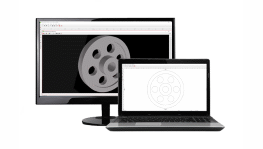
Create or Upload your CAD file – Design your parts using our free CAD or upload your CAD files, PDF drawings, or images.
-
Configure your part – Select from over 50+ materials and surface finishes. Enter quantity, address and any special comments to the machinist.
-
Receive a quote – Get a quote for your design (instantly via our CAD).
-
Order your parts – Place your order and receive your quality CNC parts!
Consistent precision and quality
“The parts I received were machined to spec. Price and quality are excellent.”
“Our parts came out better than expected. I’ll be using eMachineShop again.”
“After local shops passed on my project, eMachineShop delivered exactly the CNC-milled brackets I needed, on time.”
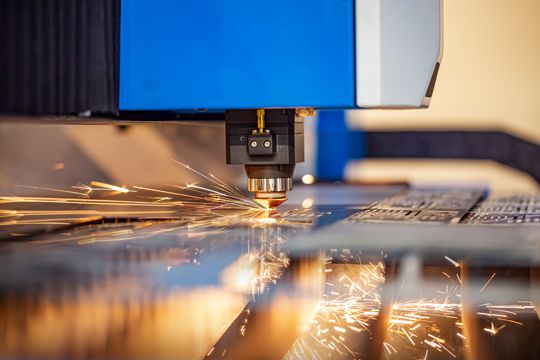
What is laser cutting?
Laser cutting is a process where a high power laser light beam is used to cut through materials. The material either melts, burns or vaporizes by the laser beam, leaving a clean edge. Laser cutting is a precise process and can be used to cut simple and complex shapes, for metal cutting or laser engraving.
Laser metal cutting is the new standard for cutting 2D parts from large sheets of raw materials. Online laser cutting services offer a convenient way to have materials cut by a laser. Laser-cutting steel is one of the most popular applications of this technology. A laser cutting company can cut many materials for sheet metal fabrication of small and large production runs.
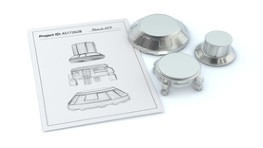
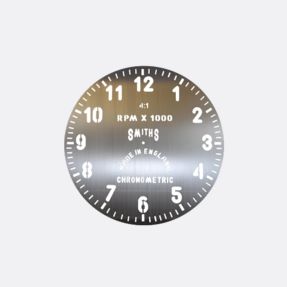
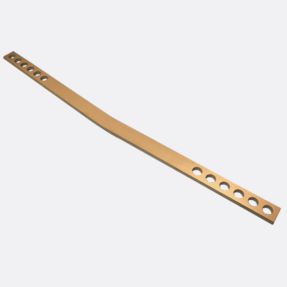
eMachineShop Made Sheet Parts
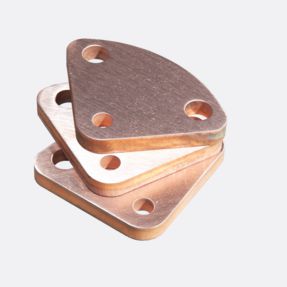
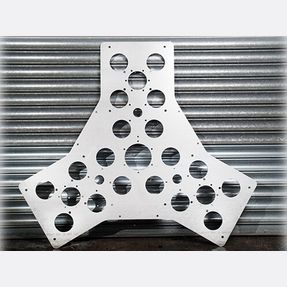
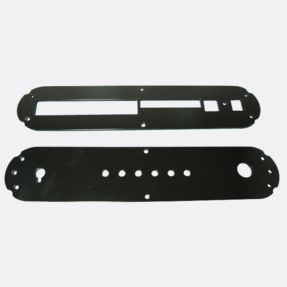
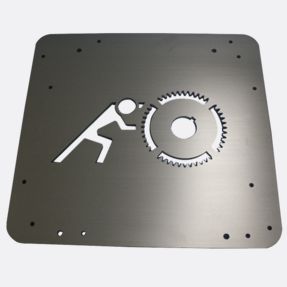
Types of Lasers used in Laser Cutting
Mainly four types of lasers are used for cutting: CO2, fiber, neodymium (Nd), and Nd:YAG lasers. CO2 lasers are the most common lasers due to their high energy and efficiency. CO2 lasers are suitable for use with engraving and cutting.
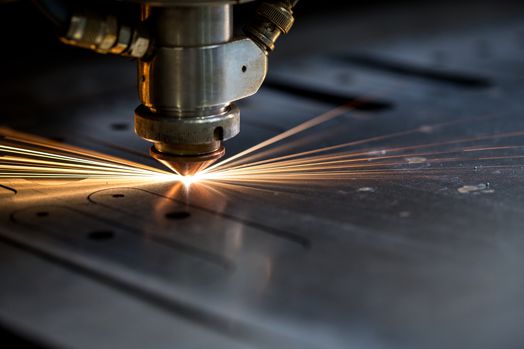
eMachineShop primarily uses fiber laser cutters since they offer several advantages over other types of laser cutters, such as increased speed, increased accuracy, and lower power consumption. Additionally, fiber lasers are much more durable and require less maintenance than other types of laser cutters. Fiber lasers also generate less heat during the cutting process, which eliminates the need for cooling systems. These factors and benefits make them ideal for custom machining since they are accurate, reliable, and cost-effective for the machine shop, resulting in lower manufacturing costs for part designers and engineers.
Fiber Laser Vs CO2 for Laser Cutting Metal
A high powered laser is necessary to vaporize surface material when cutting metals. Fiber lasers are ideal for cutting and marking metals due to their increased cutting capability and high absorption rate. For metal laser cutting services, fiber laser is unparalleled.
Benefits of CNC Laser Cutting
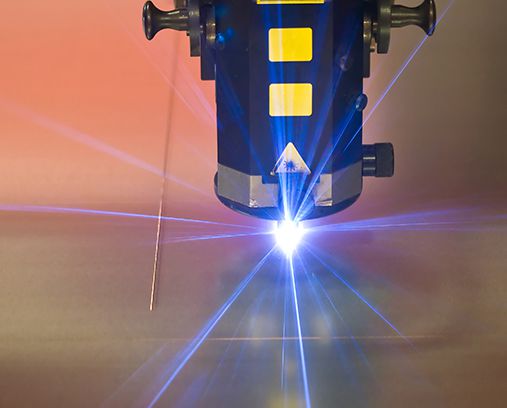
Among the many benefits of a high powered CNC laser cutting service are flexibility and precision, cost-effectiveness, and great quality. Laser metal cutting offers faster processing times and accuracy though it is more difficult to cut thicker materials, which may be more suitable for waterjet cutting. Additionally, many industries, such as tool machining, electronics, automotive, and aerospace, use laser cutting service for various purposes. Here are some of the benefits that a laser machine can provide:
AccuracyThe laser cutter produces a focused laser beam that allows precise cutting at high speed and minimal cost.
Drilling speedConsidering there is no tool positioned against the workpiece, drilling speed only depends on the optical system’s motion.
Compared to conventional drilling, laser engraving and cutting have no contact with the surface. Over time drill bits can become dull, making the machining process slow and less productive. The heat produced by the drill can distort the material and change its mechanical properties.
Able to cut difficult materialsThe laser machine can cut through a wide range of difficult materials, including steel superalloys and titanium. Laser cutting service focuses on high-precision processing of metals, industrial ceramics, and specialized alloys.
Even a high quality laser cutting service tends to develop some burrs when the machine finishes the cut.
No residual stressSince assist gas blows away most of the molten material, minimal residual stresses are created along the edges. This results in a mechanically stable and clean cut.
EconomicsMetal laser cutting is fast and efficient which makes it one of the most cost-effective processes.
Cutting vs. Engraving vs. Marking
A laser cutting company usually offers all three services at once: cut, engrave, and mark. In fact, the only difference between these operations is how deep the laser goes and how it changes the overall appearance of the material. In laser cutting, the heat from the laser cuts through materials while laser marking discolors only the surface of the material, while engraving removes a portion of the material.
What is laser engraving?
The technology of laser engraving has advanced significantly, offering unmatched precision for industrial applications. Engraving involves creating a shallow, permanent mark on a material’s surface to display fine details, serial numbers, or custom branding. Laser marking methods include laser engraving, which is primarily used on metals, industrial plastics, and stone, and annealing, which creates high-contrast marks on stainless steel and titanium without damaging the surface. An engraving service is essential for adding durable text, barcodes, and logos to high-value components.
Laser Cutting Materials
CNC machine shops offer high-quality CNC laser cutting services for a wide range of materials, including aluminum, stainless steel, titanium, brass, copper, sheet metal, and various other industrial-grade metals and alloys.
Laser Cut Steel
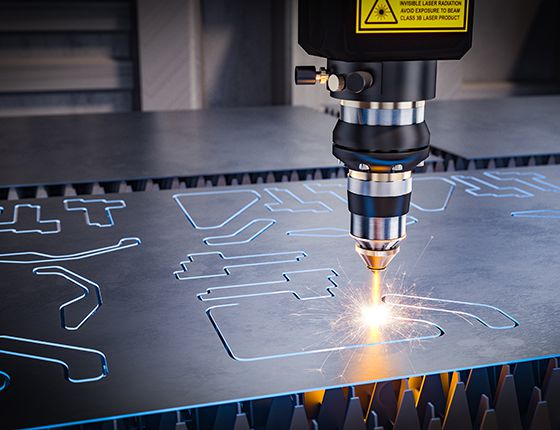
Steel requires a machine that has the capacity to cut at high power settings. Stainless steel and other steel alloys are commonly cut using CO2 and fiber lasers since these lasers are capable of achieving high power cuts. When laser cutting steel, the thickness of the sheet correlates to the amount of power required to make cuts in the durable metal. Nd: YAG lasers are not ideal for cutting steel over 20 millimeters thick though combining them with an oxygen assisted gas and an optical fiber enhancer can boost their steel-cutting capacity.
Laser Cut Metal
One of the key advantages of laser cutting is that it is capable of cutting essentially any metal including metals ranging in thickness. Metals are ductile, malleable, and reflective materials distinguished by their high rate of thermal and electrical conductivity. CNC laser cutters can cut most grades of stainless steel, mild steel, cold rolled steel, aluminum, titanium, brass, and copper.
Laser Cut Aluminum
Laser cutting is the ideal choice when it comes to cutting aluminum since laser cutting results in minimal burrs, high speed and accuracy. The level of cutting difficulty is determined by the aluminum grade. This means that higher grades of aluminum are easier to cut, since they contain more alloying elements. Since aluminum is quite reflective naturally, the laser beam can bounce back from the aluminum surface, resulting in damage to the laser cutting machine. This is an issue for CO2 lasers which contain mirrors. This is mostly challenging when cutting pure aluminum. Aluminum alloys are mixed with additional metals such as magnesium and copper, which makes them less reflective, and therefore easier to cut using an industrial CNC laser cutting machine. A fiber laser cutter is the most suitable option for cutting aluminum due to its capacity for cutting reflective materials and its high power output. Since a higher power output is necessary for laser cutting aluminum, CO2 lasers are not the best choice as they have a smaller power output compared to fiber lasers. Their wavelength is not ideal when cutting nonferrous material and they are more susceptible to the aluminum’s reflective nature.
Secondary Machining for Laser Cut CNC Parts
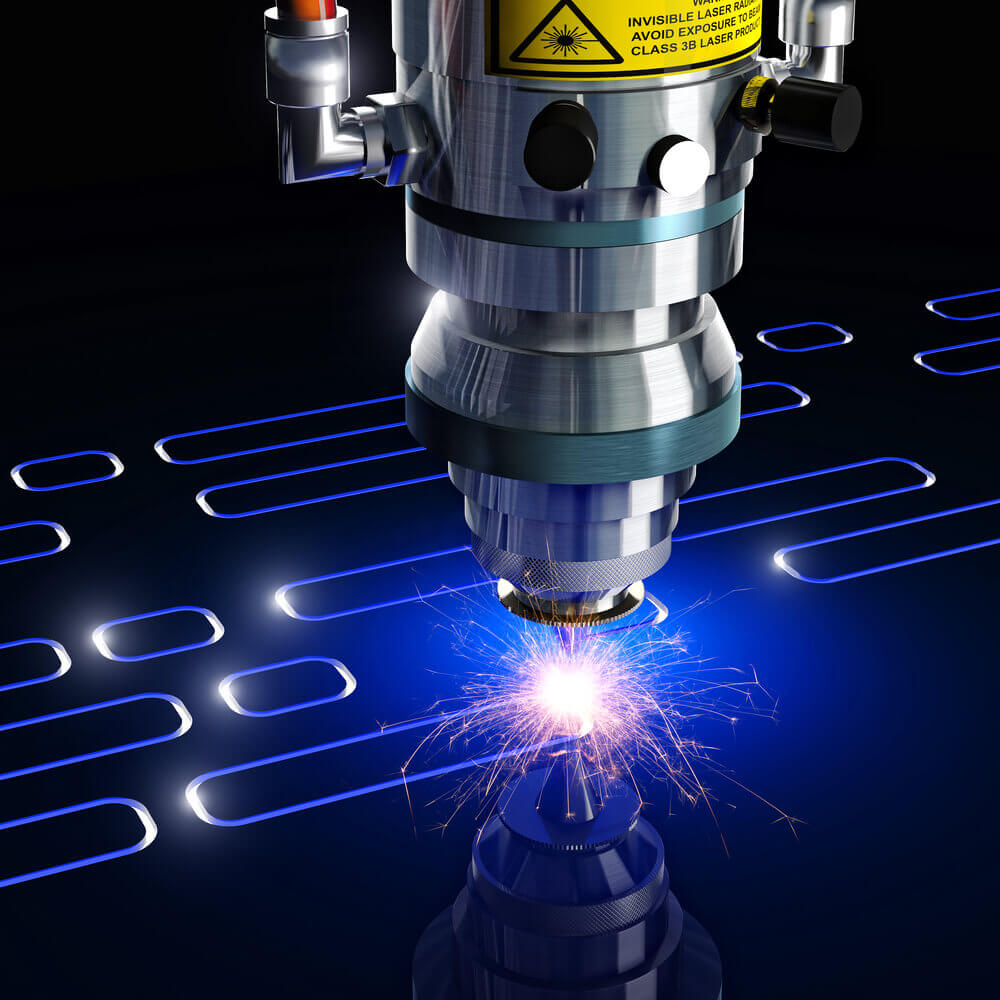
Many CAD model designers utilize secondary machining processes with laser cutting such as metal bending, tapping, and surface finishing. For metal bending, the CAD model designer can indicate the placement and desired angle of bends or tapping instructions in a laser cut part design file. After the custom parts have finished production they are sent to hydraulic press brakes for bending or to tapping machines. The majority of materials typically used in CNC laser cutting are also able to get surface finishing such as anodizing, powder coating, painting, polishing, or media blasting. This allows the custom laser cut parts to have a uniform look, added functionality, corrosion protection, or just be more cosmetically appealing. The use of these secondary machining services with laser cutting provides CAD designers more capabilities to get their custom parts into production.
Laser Cutting versus Waterjet Cutting
While laser cutting is one of the most efficient ways to create complex and intricate 2D parts, there are some limitations within this process and certain design specifications are better suited for waterjet cutting. When it comes to knowing when to use laser cutting or waterjet cutting, it is important to take into consideration the size of the parts being produced and most importantly, the thickness of the material. For thicker metal cuts, waterjet cutting is the standard machining operation instead of using a laser cutter service due to its industrial strength, accuracy, and power capacity.
The other main difference between laser cutting and waterjet cutting is the cost. Laser cutting services tend to be more cost-effective for smaller parts and projects, while waterjet cutting services are more cost-effective for larger parts and projects. Laser cutting machines need less maintenance and less power to operate than a waterjet cutting machine.
Overall, both laser cutting services and waterjet cutting services have their advantages and disadvantages, and it is important to consider the project before deciding which one is the best choice. Both services provide custom and precise work for a variety of industrial needs, and both can be used to create intricate projects. Depending on the size and thickness of the material and the intricacy of the design, either service can be the best choice for a given project.
Similar Processes
Waterjet Cutting
Waterjets mainly cut sheet material into 2D parts using a high-pressure stream of water and abrasive. Waterjet cutting is suitable for most materials and yields clean edges.
Plasma Cutting
CNC Plasma Cutters use a high-velocity stream of ionized gas to cut parts out of sheet metal. Excellent for producing 2D parts when working with thick metal sheets.
What Our Customers Say
Frequently Asked Questions
Q: Which materials are best suited for high-precision laser cutting?
A: Laser cutting is most effective for a wide range of metals, including stainless steel, aluminum, carbon steel, copper, and brass. These materials allow for clean, burr-free edges and high dimensional accuracy. While some industrial plastics can be processed, we specialize in heavy-duty metal fabrication to ensure the highest quality for engineering projects.
Q: Can you laser cut reflective metals like copper and brass?
A: Yes. Using advanced fiber laser technology, we can safely and accurately cut reflective materials such as copper, brass, and bronze. Unlike older CO2 lasers, our equipment is designed to handle these metals without risk of back-reflection, providing clean cuts even for complex geometries.
Q: Why is laser cutting preferred over other methods for metal parts?
A: Laser cutting offers superior precision (up to ±0.005 inches), minimal heat-affected zones, and the ability to cut intricate shapes without the need for expensive custom tooling. It is faster than waterjet cutting for most metal gauges and provides a much cleaner finish than plasma cutting.